Adjustable Volatility Mechanics: How Player Selections Influence Payout Distributions in Modern Digital Games
Yves Powell · Jul 30, 2026
Adjustable Volatility Mechanics: How Player Selections Influence Payout Distributions in Modern Digital Games
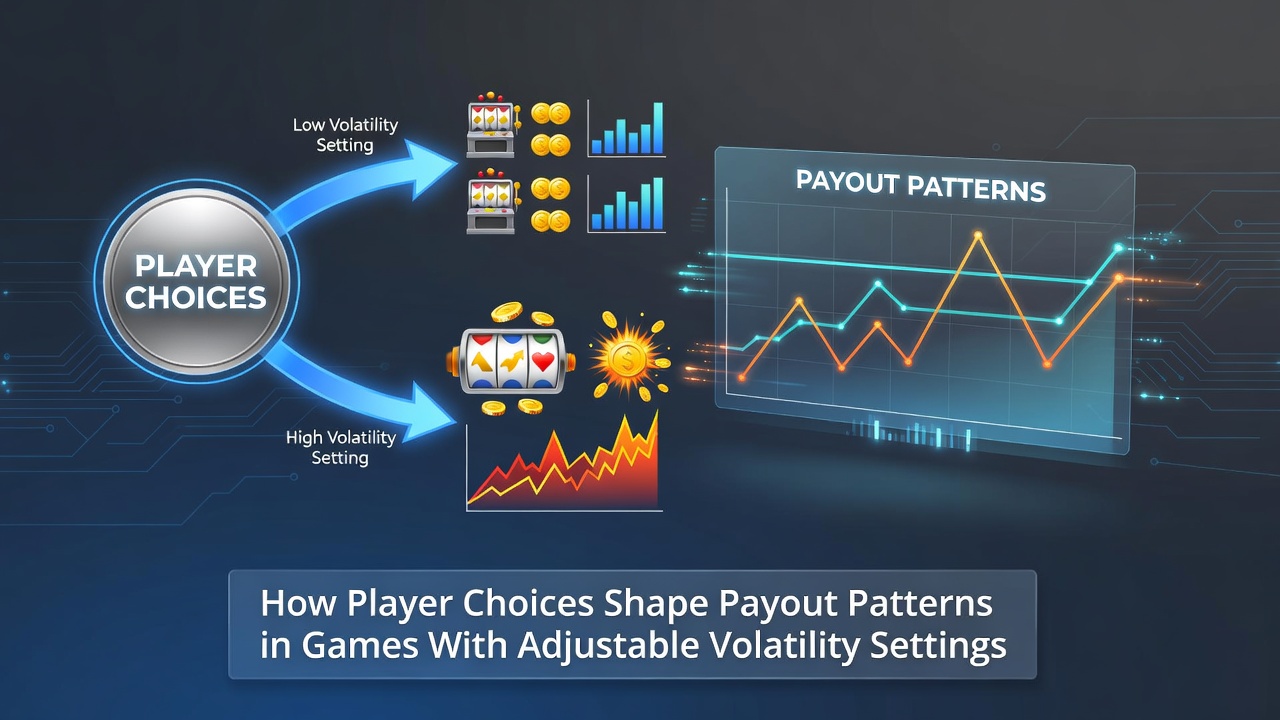
Games with adjustable volatility settings allow participants to modify core parameters that govern win frequency and size, which directly affects the distribution of payouts across sessions. Developers implement these features through selectable modes such as low, medium, or high volatility, where each option recalibrates reel weighting, symbol probabilities, and bonus trigger rates without altering the underlying return to player percentage in many cases.
Research from academic institutions demonstrates that when users switch between these modes, the resulting payout patterns shift in measurable ways, with high volatility selections producing longer dry spells followed by larger single payouts, whereas low volatility choices generate steadier sequences of smaller returns. Data collected from platform analytics shows these adjustments occur in real time as players toggle options before or during gameplay rounds.
Core Principles Behind Volatility Adjustment Systems
Volatility refers to the statistical variance in payout outcomes over time, and adjustable systems embed multiple mathematical models within a single game engine so that one selection activates a different set of random number generator parameters. Engineers design these models to maintain regulatory compliance across jurisdictions while giving participants control over session rhythm, and studies from Canadian gaming research groups indicate that such flexibility leads to distinct clustering of win events depending on the chosen setting.
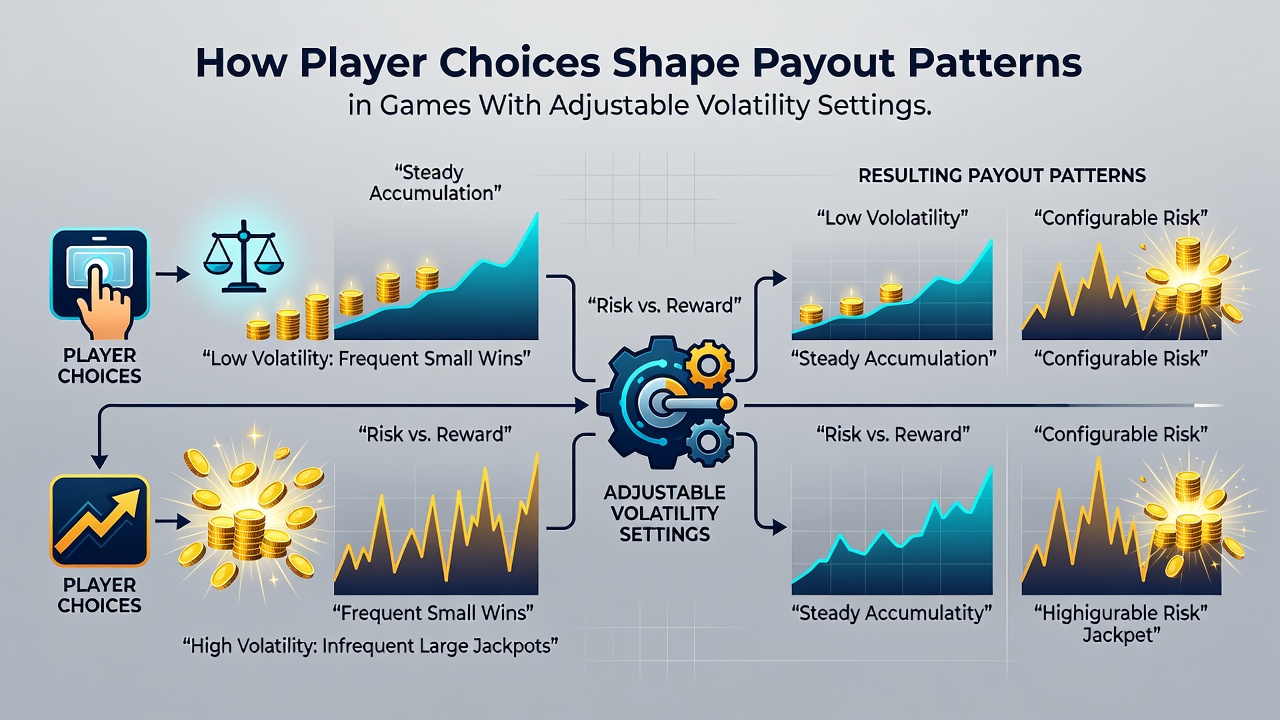
Take one platform analysis where experts tracked thousands of spins across adjustable titles: low volatility modes delivered wins approximately every four to six spins on average, while high volatility configurations extended intervals to fifteen or more spins before a payout materialized, though the average size of those infrequent wins increased proportionally. This pattern holds because the underlying code reallocates probability mass away from frequent small symbols toward rarer high-value combinations when users select higher volatility.
Observed Effects of Player Decisions on Session Outcomes
Participants who consistently choose high volatility encounter payout graphs characterized by sharp peaks separated by extended flat periods, and this behavior concentrates larger returns into fewer events that can exceed several hundred times the stake in a single outcome. Conversely, repeated selection of low volatility smooths the payout curve into a more gradual upward trajectory composed of numerous modest additions, which some tracking software visualizes through heat maps of win timing and magnitude.
One industry report from the Nevada Gaming Control Board highlights how logged player data across multiple titles reveals correlations between chosen volatility levels and the timing of bonus round activations, with high settings delaying free spin triggers but increasing their potential multiplier depth once they occur. Those who alternate between modes during a single session create hybrid payout patterns that blend elements of both distributions, producing irregular sequences that defy simple categorization.
Technical Implementation and Data Tracking
Modern game engines store separate probability tables for each volatility tier, and switching modes instructs the random number generator to draw from the corresponding table for subsequent spins. This architecture ensures that player choices translate immediately into altered event frequencies without requiring restarts, while backend logging systems record the selected tier alongside every outcome to enable later analysis of pattern formation.
Figures from European gambling research consortia reveal that sessions conducted under high volatility settings show greater standard deviation in return rates per hundred spins compared to low volatility equivalents, even when overall RTP remains constant. Developers often include preview tools that display expected win frequency ranges for each option, allowing informed selection before commitment, and these tools draw from historical simulation data rather than live results.
Comparative Analysis Across Game Categories
Adjustable volatility appears in various formats including video slots, crash games, and certain table game hybrids, yet the impact on payout patterns remains consistent in principle across categories. In slot implementations the change manifests through reel strips and payline activations, whereas in multiplier-based titles it adjusts crash point distributions or multiplier growth rates, and comparative datasets from Australian regulatory submissions demonstrate parallel shifts in outcome clustering regardless of genre.
Players who favor extended play periods often gravitate toward lower settings to sustain bankrolls through frequent small returns, while those seeking infrequent large multipliers select higher options that concentrate potential in fewer decisive rounds. Platform metrics indicate that mode selection frequency varies by time of day and device type, with mobile users showing slightly higher rates of volatility changes mid-session compared to desktop counterparts.
Conclusion
Player selections within adjustable volatility frameworks directly determine the statistical shape of payout sequences by activating different probability models embedded in the game code. Evidence from multiple regulatory and academic sources confirms that these choices produce predictable alterations in win frequency, size distribution, and bonus timing across thousands of documented sessions. As more titles incorporate such features, the relationship between user input and resulting payout architecture continues to define session dynamics in measurable, data-supported ways.