Cluster Pays Systems and Grid Mechanics Redefining Payout Calculations in Slot Development
Morgan Jung · Jul 26, 2026
Cluster Pays Systems and Grid Mechanics Redefining Payout Calculations in Slot Development
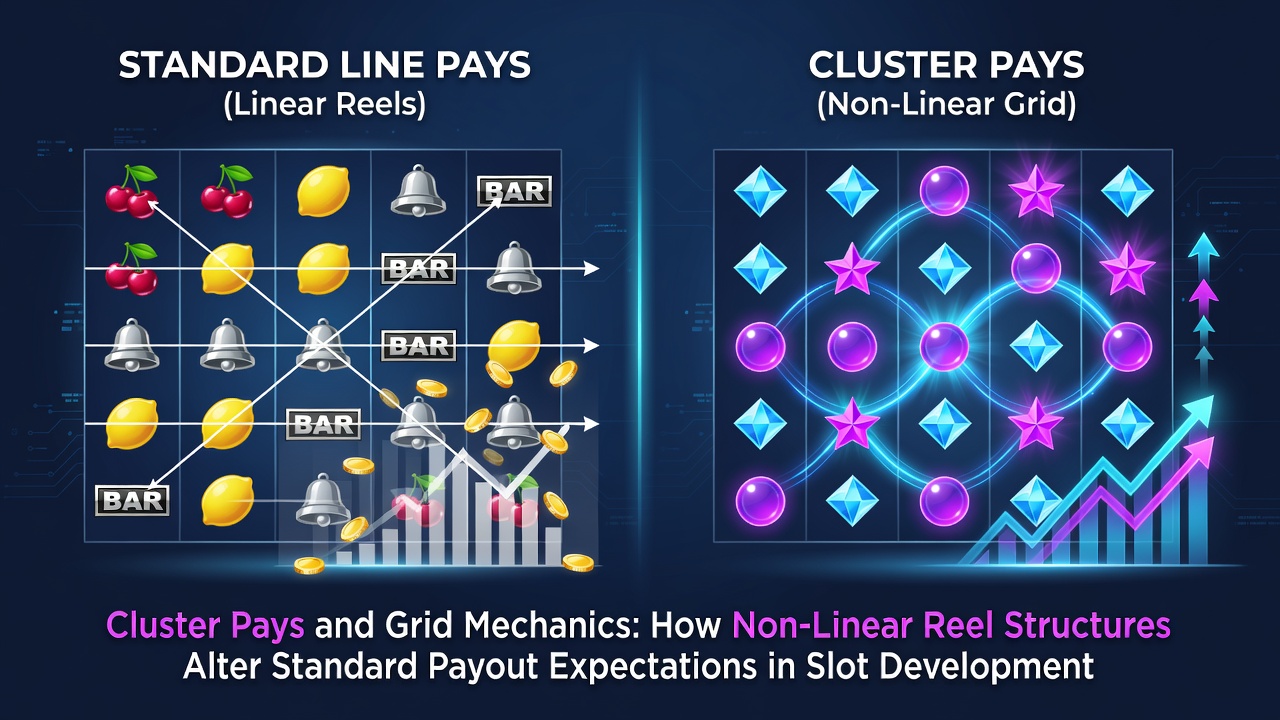
Cluster pays mechanics replace traditional payline structures with grouped symbol formations, and this shift changes how developers calculate return to player percentages along with hit frequencies across entire game sessions. Grid layouts expand beyond fixed five-reel formats into variable rows and columns, allowing symbols to connect horizontally and vertically when identical icons appear in adjacent positions without requiring straight lines.
Core Differences Between Linear and Cluster-Based Evaluation
Standard reel games evaluate wins along predetermined paths that cross the grid from left to right, whereas cluster systems trigger payouts whenever matching symbols occupy connected spaces regardless of direction or exact positioning. Developers adjust symbol distribution tables because cluster requirements often demand higher concentrations of matching icons to reach minimum group sizes, typically starting at eight or nine identical symbols in many titles. Data from industry reports indicates these adjustments directly influence volatility profiles since larger clusters produce less frequent but potentially larger returns compared with scattered line wins.
Grid mechanics introduce additional layers when rows expand or contract during play, and this variability alters the mathematical model that underpins each spin outcome. Engineers recalibrate reel strips and weighting values to maintain consistent overall return metrics even as the playable area fluctuates between spins or bonus rounds.
Impact on RTP and Volatility Modeling
Non-linear reel structures require revised probability matrices because each position no longer contributes to a fixed number of paylines. Research conducted by the University of Nevada's gaming studies department shows that cluster evaluation changes the distribution of small versus large wins, often resulting in adjusted RTP settings that account for the increased number of potential winning combinations across expanded grids. Developers therefore run thousands of simulation cycles to verify that theoretical returns align with regulatory requirements before release.
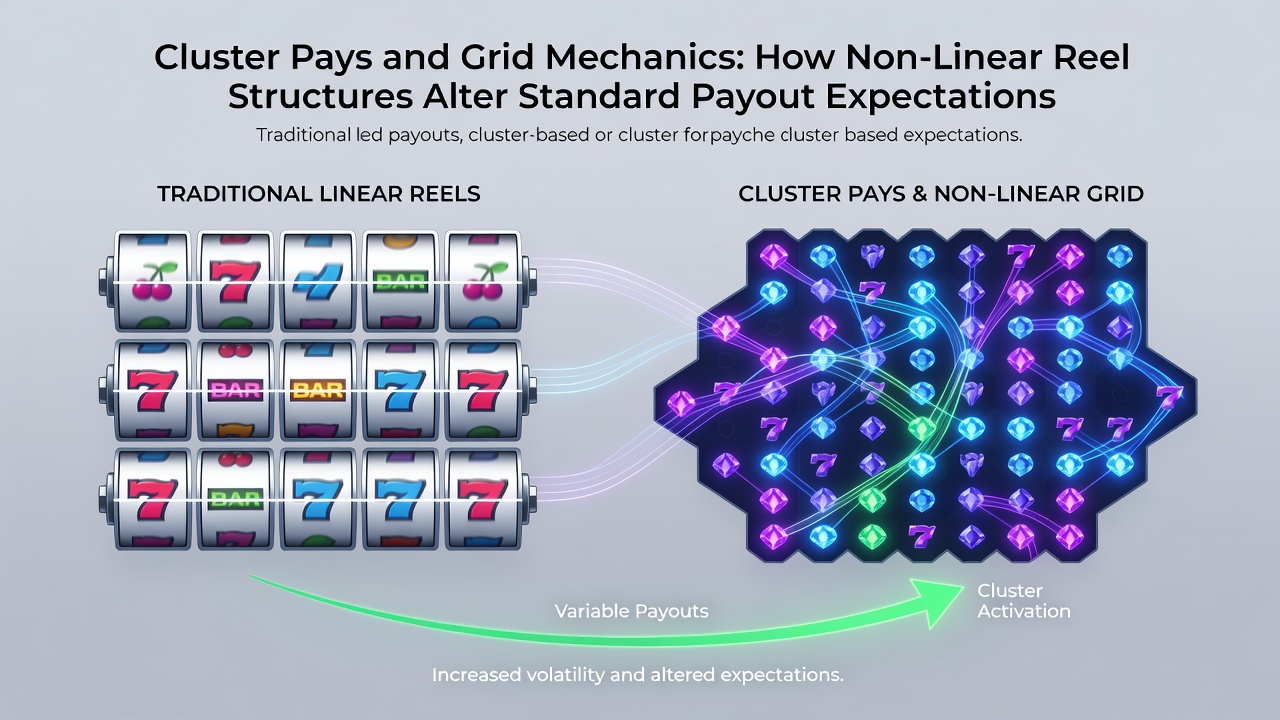
Volatility calculations become more complex when grid size influences cluster formation rates, and this factor leads providers to publish separate volatility indices for base game and feature modes. Observers note that titles using expanding infinity reel formats further modify these expectations by adding columns progressively, which multiplies available symbol positions and thereby shifts payout frequency curves.
Regulatory Adjustments and Development Timelines
Engineers incorporate upcoming rule changes scheduled for July 2026 into current design cycles, particularly those affecting how variable grid sizes interact with minimum stake requirements and feature triggers. These modifications prompt studios to document every alteration to symbol weighting and cluster detection algorithms so compliance teams can verify adherence across multiple jurisdictions. Australian regulatory sources have published technical guidelines that emphasize transparent reporting of non-linear payout models, encouraging developers to maintain detailed logs of simulation results for each grid configuration tested.
International gaming associations continue to share best practices on testing methodologies that capture the full range of outcomes possible under cluster and grid rules. Such collaboration helps standardize verification processes even as individual markets introduce distinct technical specifications.
Implementation Examples in Current Titles
Several released games demonstrate these principles through expanding grids that add rows during cascades or through cluster detection that ignores traditional left-to-right constraints. One study revealed that games incorporating both mechanics together produce payout distributions measurably different from either system used in isolation, prompting developers to recalibrate bonus round frequencies accordingly. Those who've analyzed large datasets of player sessions report that grid expansion events create secondary volatility spikes that must be balanced against base game return rates to preserve overall game mathematics.
Conclusion
Cluster pays and grid mechanics continue to reshape how studios approach payout modeling and reel design, requiring updated simulation tools and regulatory documentation. As frameworks evolve through 2026, providers maintain focus on precise calibration of symbol weights and cluster thresholds to deliver consistent performance metrics across variable grid configurations.