Clustering Algorithms Redefine Winning Patterns in Modern Five-Reel Slot Designs
Taylor Schmidt · Jun 16, 2026
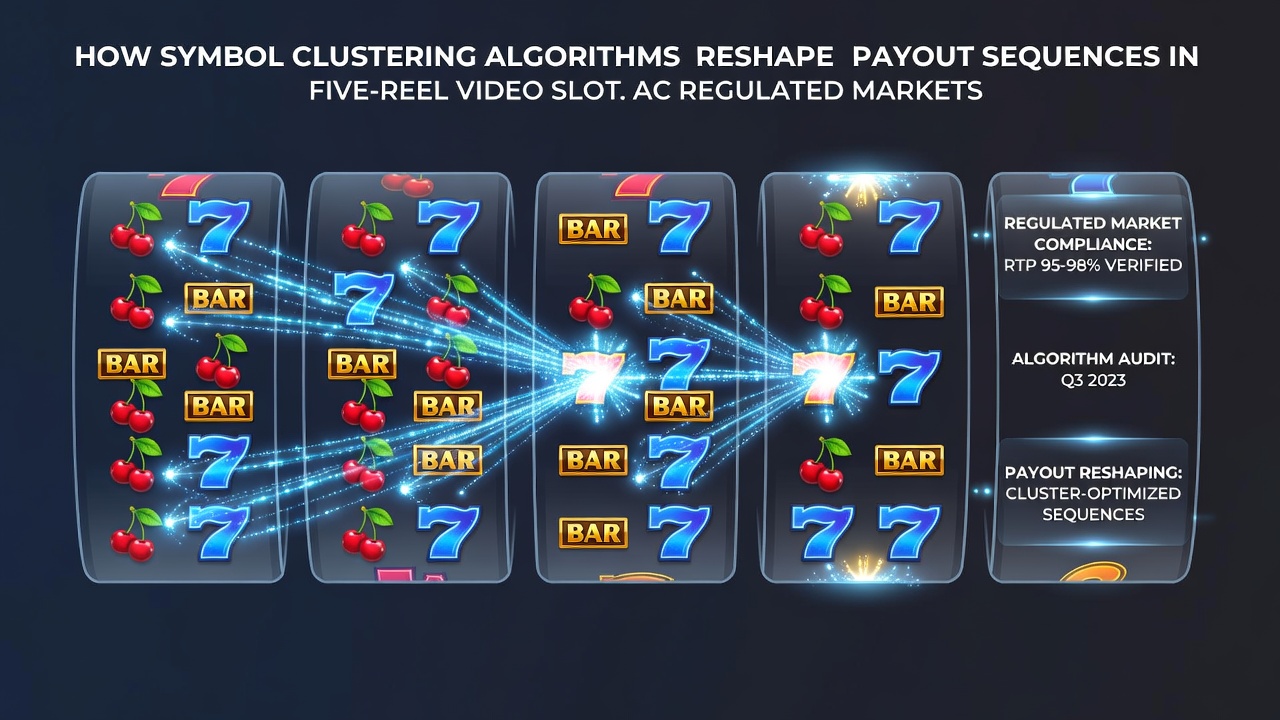
Clustering Algorithms Redefine Winning Patterns in Modern Five-Reel Slot Designs
Symbol clustering algorithms have shifted how five-reel video slots calculate and deliver payouts across regulated markets, moving beyond traditional line-based evaluations to dynamic group formations that trigger sequences of rewards based on adjacency and density rather than fixed alignments alone.
These systems identify clusters of matching symbols that appear in connected positions, often requiring a minimum number of adjacent icons to activate a payout while allowing chains of subsequent reactions to unfold within the same spin cycle. Data from industry reports shows that such mechanics appear in titles released after 2023, with operators in multiple jurisdictions adapting their platforms to accommodate the resulting sequence variations.
Mechanics Behind Cluster Detection
Engineers program clustering logic to scan reels horizontally, vertically, and sometimes diagonally after each reel stop, then apply rules that remove matched groups and drop new symbols into place to create follow-on evaluations. This process repeats until no further qualifying clusters remain, producing extended payout sequences that differ markedly from single-resolution spins common in older five-reel formats.
Regulated markets require providers to document these detection parameters clearly, ensuring transparency in how adjacency thresholds and removal priorities affect final outcomes. Observers note that the approach increases the number of micro-events per spin without altering core random number generation protocols.
Impact on Payout Sequence Timing and Frequency
Five-reel layouts incorporating clustering often generate multiple discrete payout events from one initial wager because each cluster removal can lead to fresh symbol drops and re-evaluations within milliseconds. Figures from technical compliance filings reveal average sequence lengths extending to four or five separate resolutions in certain configurations, compared with the single evaluation typical of payline-only designs.
What's interesting is how this timing structure influences player session data across different regulatory environments. Markets that track spin duration and event frequency, such as those overseen by the Nevada Gaming Control Board, record higher per-spin event counts when clustering titles appear on approved lists.
Regulatory Adaptations in Diverse Jurisdictions
Authorities in North America and Europe have updated testing standards to verify that clustering algorithms maintain consistent randomness across all possible cluster sizes and positions. Compliance teams examine source code for bias in removal order and refill mechanics, confirming that no predetermined sequences favor particular outcomes. In June 2026 several multi-jurisdictional operators plan synchronized releases of updated clustering engines that meet these enhanced verification protocols simultaneously.

Canadian provincial regulators, for example, require detailed probability tables that map every possible cluster size to its corresponding payout multiplier range. Similar documentation appears in submissions to the Malta Gaming Authority, where clustering titles undergo additional simulation runs to confirm sequence distribution meets published return-to-player parameters. Researchers at institutions studying gaming mathematics have published papers examining how these multi-step sequences alter standard deviation calculations compared with traditional reel evaluations.
Market Data and Implementation Trends
According to statistics compiled by the American Gaming Association, clustering-enabled five-reel titles accounted for a growing share of new game certifications in 2025, with operators noting increased average spin counts per session in tracked venues. The pattern holds in Australian markets where state-level oversight bodies review cluster mechanics for compliance with harm-minimization display requirements.
Providers integrate these algorithms into existing five-reel frameworks by overlaying detection layers that operate independently of payline maps, allowing both systems to coexist in hybrid releases. This dual evaluation method produces payout sequences that combine line wins with cluster events when both conditions are met on the same spin.
Technical Considerations for Developers
Developers must balance cluster size thresholds against reel dimensions to avoid excessive sequence lengths that could exceed regulatory session time guidelines. Code reviews focus on ensuring refill animations complete within acceptable frame rates while preserving the integrity of the underlying random outcomes. Those who've examined production logs find that optimized clustering routines reduce server load during peak sequence events by batching multiple evaluations into single transaction records.
Conclusion
Symbol clustering algorithms continue to expand the structural possibilities for payout sequences in five-reel video slots, prompting regulators worldwide to refine testing methodologies while operators adjust platform specifications accordingly. As markets prepare for coordinated updates around June 2026, the emphasis remains on verifiable randomness and transparent documentation of how clusters form, resolve, and generate successive events within regulated environments.