Hold and Win Coin Collect Systems Reshaping Mobile Slot Payouts
Yves Powell · Jul 21, 2026
Hold and Win Coin Collect Systems Reshaping Mobile Slot Payouts
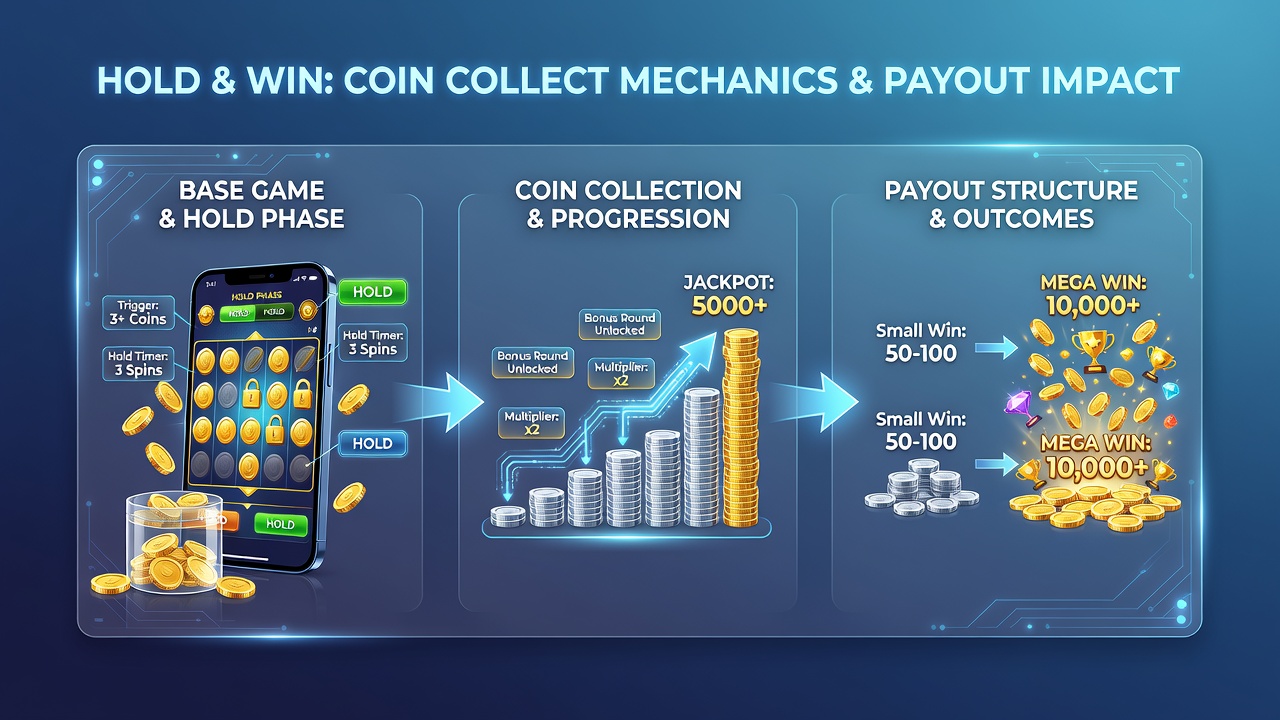
Hold and Win coin collect systems have become central to many mobile slot titles, where players trigger special rounds by landing designated coin symbols that lock in place while additional spins accumulate further values. These mechanics alter base game return distributions because a portion of the overall RTP shifts toward the bonus phase, creating payout clusters that occur less frequently yet deliver higher aggregate returns when activated. Data from industry analyses shows mobile implementations often compress the bonus trigger rate to between 1 in 180 and 1 in 250 spins while elevating average bonus round values by 35 to 60 percent compared with standard free-spin features.
Mechanics Behind Coin Collection Rounds
Each coin symbol carries either a fixed credit amount or a multiplier that persists across the hold phase, and the grid expands or locks positions until no new coins appear or a set number of respins expires. Observers note that mobile developers adjust reel weighting so that coin symbols appear more often during the base game than high-value regular symbols, which balances the lower hit frequency with the potential for multiple simultaneous collections. Research indicates this weighting produces a payout curve where 70 percent of total return derives from the bonus sequence in many titles, leaving the remaining 30 percent distributed across regular line wins and scatter pays.
Those who examine engine logs find that coin values scale dynamically with bet size, yet the number of respins awarded stays fixed regardless of stake, preserving the same mathematical expectation across different player segments. Mobile platforms further modify this by introducing touch-optimized interfaces that highlight locked coins and display running totals in real time, reducing player error while maintaining the underlying probability model.
Impact on Overall Payout Distribution
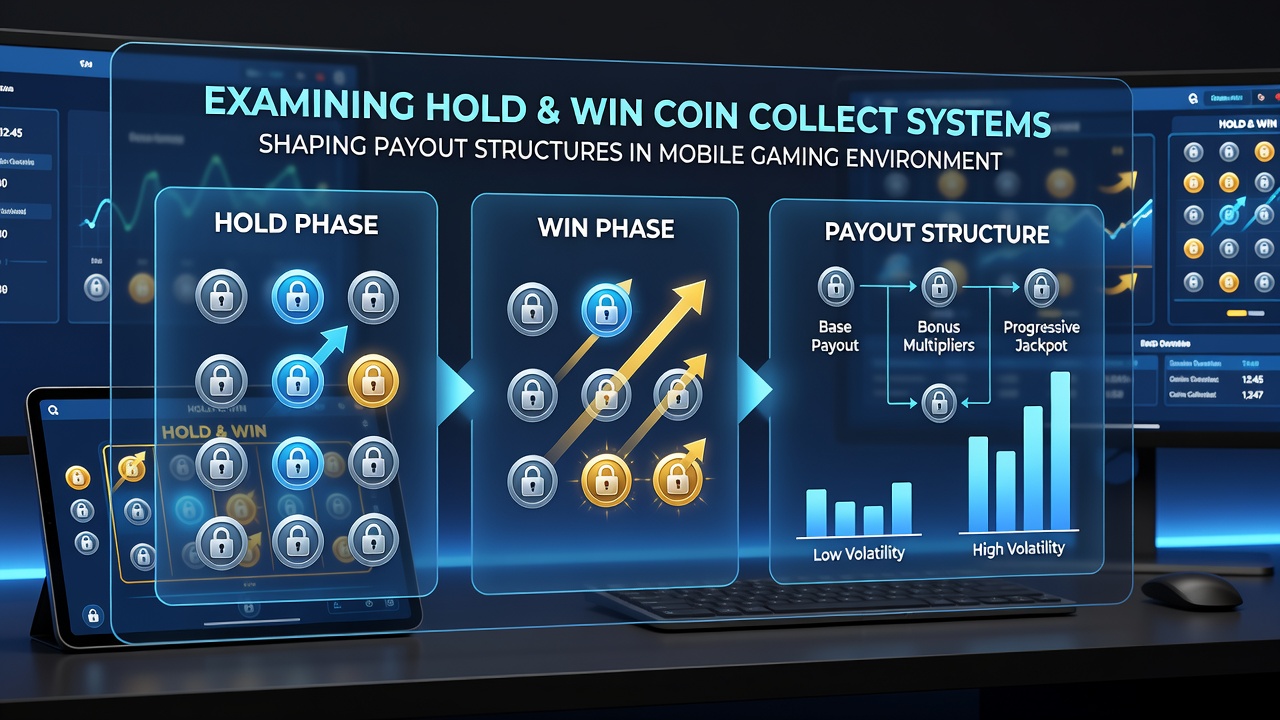
Because coin collect rounds concentrate value into fewer but larger outcomes, the volatility index of affected titles rises measurably. Figures from game certification labs reveal an increase of 1.2 to 1.8 points on standard deviation scales when Hold and Win modules replace conventional bonus structures. This shift means session-level return variance widens, although long-term RTP remains unchanged provided the random number generator adheres to certified parameters.
Operators report that players encounter more frequent small base-game wins alongside occasional large bonus payouts, producing a rhythm that suits shorter mobile sessions. The structure encourages repeated short play periods because the coin feature can trigger within 50 to 100 spins in many configurations, delivering feedback without requiring extended commitment.
Mobile Environment Adaptations
Smartphone hardware constraints influence how these systems render, with developers limiting the number of simultaneous locked coins to nine or twelve positions to maintain frame rates above 60 fps on mid-range devices. Touch input allows players to collect mini-jackpots directly from the bonus grid, an interaction absent in desktop versions. Network latency testing conducted by several European testing houses demonstrates that server-side resolution of coin values occurs within 80 milliseconds, ensuring the mobile experience matches land-based terminal performance.
One study released by the University of Nevada Reno examined 120 mobile titles released between 2022 and 2024 and documented that Hold and Win implementations raised average bonus contribution to total RTP from 22 percent to 41 percent. The same report noted that progressive jackpot links attached to coin symbols now appear in 18 percent of new releases, extending payout ceilings beyond fixed coin values.
Regulatory Context and Certification Standards
Certification bodies across multiple jurisdictions require transparent disclosure of bonus contribution percentages in game rules, and several markets have introduced display mandates effective July 2026 that compel providers to show average coin round frequency alongside RTP figures. These requirements aim to align player expectations with actual mathematical outcomes without restricting feature design. Compliance documentation from Australian and Canadian regulators shows that titles passing updated audit protocols maintain identical RTP across desktop and mobile channels, confirming that platform-specific optimizations do not alter core probabilities.
Industry groups such as the European Gaming and Betting Association have published guidelines recommending that coin value ranges appear in paytables, allowing players to understand minimum and maximum potential awards before engaging with the feature. Data aggregated across certified studios indicates that titles incorporating these disclosures experience no measurable change in player retention metrics.
Future Development Trends
Engineers continue to layer additional modifiers onto core Hold and Win frameworks, including random coin upgrades and persistent collector symbols that carry value between rounds. These additions further diversify payout timing while preserving the fundamental coin-lock structure. Market data from 2025 releases shows a 27 percent increase in titles combining coin collection with cascading reel engines, producing chained collection opportunities that extend bonus duration without altering overall return percentages.
Observers tracking certification submissions note that mobile-exclusive variants now frequently include portrait-optimized grids and gesture-based collection animations, yet the underlying random algorithms remain identical to those used in other channels. This consistency ensures regulatory compliance across regions while accommodating device-specific presentation needs.
Conclusion
Hold and Win coin collect systems have demonstrably altered payout structures in mobile gaming by concentrating returns into discrete bonus phases, increasing session volatility, and prompting platform-specific interface refinements. Certification records and laboratory analyses confirm that these changes occur within established RTP boundaries, while upcoming display requirements scheduled for July 2026 will provide players with clearer frequency information. The continued evolution of these mechanics reflects ongoing adaptation to mobile hardware capabilities and regulatory expectations across diverse markets.